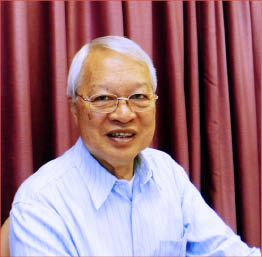
安鵬浩神父(Rev. Anscar J. Chupungco O.S.B.),本篤會士,菲律賓保祿六世禮儀學院主任,菲律賓天主教主教團禮儀委員會執行秘書。他曾任教於宗座羅馬聖安瑟莫禮儀學院超過20年,亦曾出任宗座聖禮部顧問。他已於2013年1月9日安息主懷。
English Original:
[Both text and audio can be downloaded from the website of the Hong Kong Catholic Diocesan Liturgy Commission]
LITURGY AND SPIRITUALITY OF HOLY WEEK
Anscar J. Chupungco, OSB
EASTER SUNDAY
1. "Christ is risen!" and the response "He is truly risen!". This is the greeting among Oriental Christians for fifty days, until Pentecost. In fact, the fifty days of Easter are like one long and endless day of rejoicing. The season of Easter culminates in the solemnity of Pentecost, just as the resurrection of Christ culminated in the bestowal of the Holy Spirit.
2. Alleluia fills the liturgy of the Mass and the liturgy of the hours. Alleluia is the typical Easter acclamation that resounds during the season. To heighten it the Roman Church (from the sixth century) did not sing the Alleluia from Ash Wednesday to Easter Vigil. This Roman practice was questioned by the Oriental Churches and became one of the items of controversy between Rome and the Orthodox Churches as late as the fourteenth century.
3. The Gloria is another Easter component. Although its opening lines refer to the song of the angels on Christmas night, it was originally associated with Easter. There was a time in the sixth century when it was sung only at the bishop’s Masses and was allowed to priests only on Easter.
4. For fifty day the paschal candle and the image of the Risen Christ are kept in the sanctuary. The paschal candle is best positioned beside the ambo and is lighted in all Masses and baptisms during the Easter Season.
5. The spiritual and liturgical richness of Easter Vigil has affected only in a limited way the celebration of Easter Sunday in terms of solemnity. Except for the possibility of renewing the baptismal vows on Easter Sunday Masses and the chanting of the Easter sequence, the liturgy is practically reduced, in some places, to that of an ordinary Sunday.
2.在聖週星期六,教會在上主的墓前守候,默想著祂的受苦和死亡。在中世紀時代,這天是用以朝拜聖墳的。巴哈(Johann Sebastian Bach)的《馬太受難曲》(St. Matthew Passion)中的總結句就壯麗地抓住了聖週星期六的神髓:「我們帶淚坐在祢墓旁,向祢低聲細說:安睡吧!安睡吧!」。
另附一些不錯的《馬太受難曲》演奏:
Bach, Matthäus-Passion BWV 244. Karl Richter (1971):
Bach Matthäus Passion St Matthew BWV 244 John Eliot Gardiner & The English Baroque Soloists:
Exsúltet iam angélica turba cælórum:
exsúltent divína mystéria:
et pro tanti Regis victória tuba ínsonet salutáris.
Gáudeat et tellus, tantis irradiáta fulgóribus:
et ætérni Regis splendóre illustráta,
tótius orbis se séntiat amisísse calíginem.
Lætétur et mater Ecclésia,
tanti lúminis adornáta fulgóribus:
et magnis populórum vócibus hæc aula resúltet.
[Quaprópter astántes vos, fratres caríssimi,
ad tam miram huius sancti lúminis claritátem,
una mecum, quæso,
Dei omnipoténtis misericórdiam invocáte.
Ut, qui me non meis méritis
intra Levitárum númerum dignátus est aggregáre,
lúminis sui claritátem infúndens,
cérei huius laudem implére perfíciat.]
[V/ Dóminus vobíscum.
R/ Et cum spíritu tuo.]
V/ Sursum corda.
R/ Habémus ad Dóminum.
V/ Grátias agámus Dómino Deo nostro.
R/ Dignum et iustum est.
Vere dignum et iustum est,
invisíbilem Deum Patrem omnipoténtem
Filiúmque eius unigénitum,
Dóminum nostrum Iesum Christum,
toto cordis ac mentis afféctu et vocis ministério personáre.
Qui pro nobis ætérno Patri Adæ débitum solvit,
et véteris piáculi cautiónem pio cruóre detérsit.
Hæc sunt enim festa paschália,
in quibus verus ille Agnus occíditur,
cuius sánguine postes fidélium consecrántur.
Hæc nox est,
in qua primum patres nostros, fílios Israel
edúctos de Ægypto,
Mare Rubrum sicco vestígio transíre fecísti.
Hæc ígitur nox est,
quæ peccatórum ténebras colúmnæ illuminatióne purgávit.
Hæc nox est,
quæ hódie per univérsum mundum in Christo credéntes,
a vítiis sæculi et calígine peccatórum segregátos,
reddit grátiæ, sóciat sanctitáti.
Hæc nox est,
in qua, destrúctis vínculis mortis,
Christus ab ínferis victor ascéndit.
Nihil enim nobis nasci prófuit,
nisi rédimi profuísset.
O mira circa nos tuæ pietátis dignátio!
O inæstimábilis diléctio caritátis:
ut servum redímeres, Fílium tradidísti!
O certe necessárium Adæ peccátum,
quod Christi morte delétum est!
O felix culpa,
quæ talem ac tantum méruit habére Redemptórem!
O vere beáta nox,
quæ sola méruit scire tempus et horam,
in qua Christus ab ínferis resurréxit!
Hæc nox est, de qua scriptum est:
Et nox sicut dies illuminábitur:
et nox illuminátio mea in delíciis meis.
Huius ígitur sanctificátio noctis fugat scélera, culpas lavat:
et reddit innocéntiam lapsis et mæstis lætítiam.
Fugat ódia, concórdiam parat et curvat impéria.
In huius ígitur noctis grátia, súscipe, sancte Pater,
laudis huius sacrifícium vespertínum,
quod tibi in hac cérei oblatióne solémni,
per ministrórum manus
de opéribus apum, sacrosáncta reddit Ecclésia.
Sed iam colúmnæ huius præcónia nóvimus,
quam in honórem Dei rútilans ignis accéndit.
Qui, lícet sit divísus in partes,
mutuáti tamen lúminis detrimenta non novit.
Alitur enim liquántibus ceris,
quas in substántiam pretiósæ huius lámpadis
apis mater edúxit.
O vere beáta nox,
in qua terrénis cæléstia, humánis divína iungúntur!
Orámus ergo te, Dómine,
ut céreus iste in honórem tui nóminis consecrátus,
ad noctis huius calíginem destruéndam,
indefíciens persevéret.
Et in odórem suavitátis accéptus,
supérnis lumináribus misceátur.
Flammas eius lúcifer matutínus invéniat:
ille, inquam, lúcifer, qui nescit occásum.
Christus Fílius tuus,
qui, regréssus ab ínferis, humáno géneri serénus illúxit,
et tecum vivit et regnat in sæcula sæculórum.
安鵬浩神父(Rev. Anscar J. Chupungco O.S.B.),本篤會士,菲律賓保祿六世禮儀學院主任,菲律賓天主教主教團禮儀委員會執行秘書。他曾任教於宗座羅馬聖安瑟莫禮儀學院超過20年,亦曾出任宗座聖禮部顧問。他已於2013年1月9日安息主懷。
English Original:
[Both text and audio can be downloaded from the website of the Hong Kong Catholic Diocesan Liturgy Commission]
LITURGY AND SPIRITUALITY OF HOLY WEEK
Anscar J. Chupungco, OSB
HOLY SATURDAY
1. "On the sixth day God completed all the work he had been doing, and on the seventh day he ceased from all his work" (Gn 2:2). The patristic literature explains this passage in the light of Christ's mystery. Christ entered Jerusalem on the first day of the week to begin the work of the new creation, completed it on the sixth day when he died on the cross, and rested on Saturday from his work. Holy Saturday is the day of Christ's rest, as he lay buried in the tomb.
a. An ancient homily on Holy Saturday reads: "What thing is this? Today a great silence has fallen on earth, and with it also solitude. There is great silence, because the King sleeps; the earth trembled and was silent, because the Lord slept in the flesh... God died in the flesh".
b. Silence, gravity of demeanor, a sense of desolation, and recollection are the characteristic traits of Holy Saturday. These are external expressions of our awe and admiration at what Christ has done. In churches the only sound that can be heard is the chanting of the divine office. The altar is left bare and the holy mass is not celebrated. Holy Communion is given only as viaticum to the dying.
2. On Holy Saturday the Church waits at the Lord's tomb, meditating on his suffering and death. In the middle ages it was the custom to venerate the holy sepulcher on this day. The spirit of Holy Saturday is magnificently captured by the concluding chorus of J.-Sebastian Bach's Passion according to St. Matthew: "We sit by your grave with tears on our eyes, and to you we whisper: have a restful sleep, have a restful sleep".
EASTER VIGIL, THE MOTHER OF ALL VIGILS
1. St. Augustine called the Easter vigil the mother of all vigils, because all the other vigils we celebrate in the course of the year (Eucharistic vigils, vigils for the dead, etc.) draw their meaning from it and in some way prolong its effect. St. Augustine writes: "While we keep vigil on this night during which we recall to mind the burial of our Lord, we want our vigil to coincide with the time when he slept for us. Thus in the very night when he slept we keep vigil. During the time of his sleep we solemnize a vigil, so that when finally we have arisen for the eternal vigils, he may keep vigil for us".
2. The Easter vigil is arranged in four parts: the service of light, the liturgy of the word, the liturgy of baptism and renewal of baptismal vows, and the liturgy of the Eucharist. The central parts of the entire celebration are the baptismal and Eucharistic liturgy. While the season of Lent centered on the word of God for conversion, penance, and preparation for baptism, Easter centers on the sacraments of baptism and the Eucharist.
A. The Service of Light
1. Light is an integral and symbolic part of Easter vigil. First, we recall the creation of light at the dawn of time, when God said: "Let there be light". By his resurrection Christ became the light of the world. Second, we use light to signify that those who have been baptized have become light in the Lord. St. Justin Martyr called baptism "Photismos" or illumination.
2. In antiquity the lighting of lamps and candles was part of the office of the "lucernarium" which was a type of vigil prayer before an important feast. The lighting of the paschal candle is a solemn form and a remnant of that office of the "lucernarium".
a. The celebrant traces the sign of the cross, the Greek letters alpha and omega, and the current year, saying: "Christ yesterday and today, the beginning and the end, alpha and omega, all time belongs to him and all ages". These words are a profession of the Church's faith that by his resurrection Christ has gained absolute dominion over all ages; he is the key to the Christian understanding of everything in the universe. The current year is written on the paschal candle to signify that this year is also the year of the Lord, that is, it belongs to him.
b. At the procession the deacon or priest proclaims "Christ our light" three times, as he spreads light around him from the paschal candle. The paschal candle now represents Christ who is our light. The procession led by the lighted paschal candle reminds us of the Exodus of the chosen people. The column of fire guided them on their way toward the Promised Land. We too are guided by Christ on our Exodus from the slavery of sin to the freedom of God's people.
3. The "Exultet" or Easter proclamation is a fourth-century hymn attributed to St. Ambrose of Milan. It is a solemn proclamation of Christ's resurrection that took place on this night. This is why the "Exultet" focuses its attention on the night. This night was in fact the night of the Exodus, the night of baptism, the night of the resurrection.
With poetic indulgence the "Exultet" exclaims in words that show the immensity of God's love when he gave away his Son as well as the immeasurable grace, thanks to Adam's sin, of having Christ as our Redeemer: "Father, how wonderful your care for us! How boundless your merciful love! To ransom a slave you gave away [Latin: tradidisti, meaning betrayed!] your Son. O happy fault, O necessary sin of Adam, which gained for us so great a Redeemer!"
B. The Liturgy of the Word
1. The present-day liturgy of the word offers nine readings including the epistle and the gospel. Before the sixth century the number of readings in Rome was six. After this the number became 12 or in the Lateran Basilica 24, because the 12 readings were in Latin and Greek for the benefit of the Greek-speaking faithful in Rome.
a. Looking closely at the Old Testament readings, we are able to gather the chief topics: creation, Exodus, Church, universality of salvation, baptism as wisdom, and baptism as new life. In short, the readings speak about creation and salvation.
b. But the readings are not meant to be taken merely as a review of the things God accomplished in the history of salvation. The prayer that follows every reading affirms that what God did in the past he still does today, that what he promised to Abraham and through the prophets he now fulfills in the sacrament of baptism. The difference is that the fulfillment is more wondrous than the promise itself.
c. After the last reading from the Old Testament the Gloria is sung and the church bells are rung festively. After the epistle the Alleluia is intoned solemnly. From then on, until Lent, the Gloria and the Alleluia will constantly remind us of this night of nights, of this mother of all vigils.
C. The Liturgy of Baptism and Eucharist
1. Baptism and Eucharist are the two sacraments that culminate our Lenten, Holy Week, and Easter Triduum observance. A complete celebration of Easter vigil includes the sacraments of baptism, confirmation, and communion, or in short, the sacraments of Christian initiation. The entire Lenten season and the plan of the Easter vigil, especially the readings, are all directed to the celebration of baptism.
2. The wholeness of the Easter vigil celebration requires the renewal of baptismal vows by the assembly. In a sense, for the Christian community this is the culminating point of the entire Lenten observance. That is why the renewal of baptismal vows should be given greater care, planning, and catechesis. For us who are already baptized, the renewal of baptismal vows mean that we commit ourselves, in the words of St. Ambrose, "to cling to the cross of Jesus Christ, to cling to his nails, and not to allow the devil to lure us down from the cross".
安鵬浩神父(Rev. Anscar J. Chupungco O.S.B.),本篤會士,菲律賓保祿六世禮儀學院主任,菲律賓天主教主教團禮儀委員會執行秘書。他曾任教於宗座羅馬聖安瑟莫禮儀學院超過20年,亦曾出任宗座聖禮部顧問。他已於2013年1月9日安息主懷。
English Original:
[Both text and audio can be downloaded from the website of the Hong Kong Catholic Diocesan Liturgy Commission]
LITURGY AND SPIRITUALITY OF HOLY WEEK
Anscar J. Chupungco, OSB
GOOD FRIDAY OF THE LORD'S PASSION
A. The Celebration of the Lord's Passion
1. The celebration of the Lord's passion on Good Friday is not done in the form of a Eucharistic celebration because of the ancient tradition of fasting.
2. The celebration takes basically the form of a liturgy of the word with the veneration of the cross and Holy Communion. The central part of the celebration is the proclamation of the passion as recorded in the Gospel of John. Through this the events of Christ's suffering and death are recalled and in some way made present to the assembly.
3. The celebration takes place at about three o'clock in the afternoon, the time when Christ died on the cross. The hour of the celebration attempts to coincide with the hour of Christ's death. We are dealing not only with an anniversary but also with the reality of the here-and-now.
B. The Liturgy of the Word
1. Toward the eighth century the liturgy of the word on Good Friday in Rome consisted of the following elements: prostration of the celebrant before the altar and silent prayer, two scriptural readings each followed by a responsorial psalm, the proclamation of the passion of Christ, and general intercessions. The liturgy of Vatican II follows this format very closely.
2. The proclamation of the passion narrative on Good Friday is an ancient tradition in the Church. In the fourth century a pilgrim from southern France, by the name of Egeria, describes how the bishop of Jerusalem read the passion of our Lord in the church of Golgotha amidst the loud wailing and weeping of the assembly. The reading of the passion is the heart of the entire liturgy.
With realism St. Augustine explains in one of his Good Friday homilies: "As we recall the passion of Christ, we see him, as it were with our eyes, nailed on the cross". We may say that the event on that Friday witnessed by our Lady and the beloved disciple as they stood at the foot of the cross becomes a living reality for us, as we read the passion narrative. Christ is present in his word, and with him also the event of his passion and death.
3. The general intercessions conclude the liturgy of the word. The format follows the ancient usage of the Church of Rome, namely: the priest sings the introduction or invitation, then all kneel in silent prayer of petition, and the priest sings the prayer in behalf of all.
a. On Good Friday the general intercessions match the importance of the moment by the solemnity of their structure and the breadth of the intentions. The Good Friday general intercessions are the propitious moment to pray for the important and pressing needs of the Church and the whole world. As St. Teresa of Avila would say: when the world is on fire, we cannot pray for little things.
b. In the inaccuracy of our human tongue we could say that after the reading of the passion narrative, whereby we present to the Father what his Son has done for us and for the world, we make our petitions with confidence that he will not refuse them on account of the merits of his Son.
C. The Veneration of the Cross
1. The veneration of the cross is like a sequel to the proclamation of Christ's passion and death. In the fourth century in Jerusalem the wood of the cross, discovered by Empress Helena, was venerated on Good Friday. Egeria recounts that the bishop and people bowed before the true cross and kissed it. In the seventh century the practice was introduced in Rome, where a relic of the true cross was kept in the Basilica of the Holy Cross. It should be noted that the object of veneration was not the image of Christ on the cross, but the wood of the cross.
2. The Reproaches and the Trisagion were introduced in Rome in the ninth century to accompany the veneration of the cross.
a. The Reproaches add to the veneration of the cross a human touch. They make us profoundly aware of the human side of the passion of Christ. During his passion Christ never uttered a word of reproach, never a word of bitterness. He was led to the cross and crucified like a meek lamb being led to the slaughterhouse.
b. The Reproaches then should be regarded as a poetic form that expresses not any bitterness from the part of Christ but our own confession of guilt. The Reproaches are the self-reproach of a conscience stricken by grief at the sight of Christ nailed on the cross. We may read it in a reverse manner: "My Savior, what have you done for me? How have you offended me? You led me out of Egypt, from slavery to freedom, but I led you, my Savior, to the cross".
c. On the other hand, the Trisagion (thrice holy): "Holy is God, holy and strong, holy immortal one" is an affirmation of Christ's divinity. It balances the human aspect of the crucifixion of Christ, as depicted by the words of the Reproaches, by proclaiming that the suffering Christ is God. Even in his moment of utter humiliation Christ never ceased to be the Son of God. Our faith tells us that on the cross it was God who offered his human life for us.
D. Holy Communion
The Holy Communion we receive on Good Friday has a particular significance. It stresses our union with him whose body was pierced, "broken" for us, on the cross. Our union with Christ is a sharing in his suffering and death, before it is a sharing in his glorious resurrection.
安鵬浩神父(Rev. Anscar J. Chupungco O.S.B.),本篤會士,菲律賓保祿六世禮儀學院主任,菲律賓天主教主教團禮儀委員會執行秘書。他曾任教於宗座羅馬聖安瑟莫禮儀學院超過20年,亦曾出任宗座聖禮部顧問。他已於2013年1月9日安息主懷。
English Original:
[Both text and audio can be downloaded from the website of the Hong Kong Catholic Diocesan Liturgy Commission]
LITURGY AND SPIRITUALITY OF HOLY WEEK
Anscar J. Chupungco, OSB
HOLY THURSDAY
1. Until the seventh century the Roman Church ended the Lenten observance on Holy Thursday morning with the reconciliation of public penitents by the bishop in the presence of the faithful. These were penitents that had been chosen on Ash Wednesday for reconciliation. As sign of penance they had been covered with ashes on Ash Wednesday and dressed in sackcloth.
The 13th century rite of reconciliation was dramatic. Penitents waited outside the church while the archdeacon pleaded for them. He addressed the bishop in these words: “Holy Father, the time for reconciliation of penitents has come. There is water for baptism, and there are tears for penance (lavant aquae, lavant lacrimae)”. Baptism was called the “first penance” or first conversion. In baptism the candidate crossed the water of rebirth; through tears of compunction the penitent obtained reconciliation (second conversion).
2. In the evening another Mass was celebrated. It would seem that by the tenth century this Mass commemorated the Last Supper. Thus the Triduum opens grandly with the commemoration of the Lord’s Supper.
3. The washing of feet existed by the middle of the fifth century in Jerusalem whence it was adopted by the other Churches in the East and the West. The papal household toward the seventh century practiced it after the evening Mass, but it did not form part of the liturgy until the reform of Vatican II. After washing the feet of his household the pope partook of supper in the company of the poor: the Eucharist overflowed in a meal with the people with whom Jesus wanted to be identified, namely the poor and the marginalized.
It is important to see the connection between the Eucharist and the washing of the feet. The washing of the feet is not merely a dramatic representation of what Jesus did at the Last Supper. In the Gospel of John, which does not contain the story of the institution of the Eucharist, the washing of the feet is the concrete symbol of what the Eucharist is all about: humble service. The washing of the feet is a graphic symbol and image of the Eucharist.
Holy Thursday used to be called Maundy Thursday (Maundy is an English version of the Latin mandatum or command). It is the day when the Church recalls the Lord’s command at the Lat Supper to “do this in memory of me”. In the gospel of John this command is expressed in the other command “wash each other’s feet” as sign of mutual service. Thus Holy Thursday is Maundy Thursday because of the double command of the Lord to celebrate the Eucharist and serve one another.
To express concretely the meaning of the washing of the feet, the Church urges us on this day to offer gifts in cash or kind for the poor (this is the only day of the year when this is explicitly mentioned in liturgical books).
4. The reposition of sacred hosts not consumed during Mass was an ancient practice, which was later solemnized on Holy Thursday toward the thirteenth century when Pope Urban IV introduced the feast of Corpus Christi.
5. The stripping of altar cloths was an ancient practice to signify the end of the Eucharistic celebration, in the same way as we remove table cloths after a solemn dinner. Today the stripping of the altar cloth is taken to symbolize the stripping of Christ at his passion, but there is no historical basis for this.
b.歡宴的時刻是在復活前夕,當慕道者受洗時、當基督徒團體更新其領洗宣願時、以及當復活的基督在復活的餐桌上主持祂的盛宴開始。復活主日是眾日之日(day of days),故此擴展出八日慶期,這八天猶如一天。在古時,這八日慶期是指新入教者要在這八天內都穿上聖洗白衣。
(待續)
安鵬浩神父(Rev. Anscar J. Chupungco O.S.B.),本篤會士,菲律賓保祿六世禮儀學院主任,菲律賓天主教主教團禮儀委員會執行秘書。他曾任教於宗座羅馬聖安瑟莫禮儀學院超過20年,亦曾出任宗座聖禮部顧問。他已於2013年1月9日安息主懷。
English Original:
[Both text and audio can be downloaded from the website of the Hong Kong Catholic Diocesan Liturgy Commission]
LITURGY AND SPIRITUALITY OF HOLY WEEK
Anscar J. Chupungco, OSB
THE EASTER TRIDUUM
1. "On the third day he rose again from the dead". From this article of faith the church developed the observance of the Easter Triduum.
a. St. Ambrose (Letter 23) writes: "It is necessary that we observe not only the day of Christ's passion, but also the day of his resurrection, so that we may have a day of bitterness as well as day of joy. This is the holy Triduum in which Christ suffered, was buried, and rose again". Hence, Friday, Saturday, and Sunday.
b. Toward the seventh century the Roman Church introduced the memory of the Lord's Supper on Holy Thursday with an evening Mass. By the tenth century Holy Thursday came to be regarded as part of the Triduum, which meant that Sunday was excluded from it. Vatican II has made a compromise, by extending the concept of Triduum to the evening of Holy Thursday.
2. From the time of Tertullian in the third century Good Friday and Holy Saturday were days of fasting, while Easter was the day for feasting. The two days of fasting were an immediate preparation of the catechumens for baptism, with the Christian community observing the fast with them. Fasting was from sunrise to sunset. Because Holy Communion was considered to break the fast, Mass was not celebrated on Good Friday and Holy Saturday.
a. People fast for various motives: because of poverty, asceticism, protest, or cosmetic reason. The Good Friday fast is our way of expressing sorrow over the suffering and death of Christ, and of showing our union with those who on this day and even on Easter Sunday are forced to fast on account of poverty.
b. Feasting begins on Easter vigil when candidates are baptized, when the Christian community renews its baptismal promises, and when the risen Christ hosts the Easter table of his body and blood. Easter Sunday is the day of days, which is extended to eight days (octave), as if these were still Easter Sunday. In antiquity this was insinuated to by the practice of the neophytes who wore their white baptismal garment for eight days.
1)在猶太信仰中:根據拉比傳統,這一週就相當於創世週(the week of Creation)、出離埃及週(the week of Exodus)、進入福地週(the week of entry into the promised land),以及默西亞回歸週(the week when the Messiah would return)。
1.有關聖枝主日禮儀的最早記載是來自厄格利亞(Egeria),她記述了約381年在耶路撒冷的慶典。若在下午五時,基督進耶京的福音選段會在聖墳教堂(Church of the Holy Sepulcher)被誦讀。接著是手持棕櫚枝(即今聖枝)或橄欖枝遊行到橄欖山。然後遊行隊伍返回聖墳教堂,並在其內舉行晚禱禮。在遊行中,主教騎在驢子,以仿效耶穌騎驢進耶京,而不像那些羅馬入侵者那樣騎馬進城。
安鵬浩神父(Rev. Anscar J. Chupungco O.S.B.),本篤會士,菲律賓保祿六世禮儀學院主任,菲律賓天主教主教團禮儀委員會執行秘書。他曾任教於宗座羅馬聖安瑟莫禮儀學院超過20年,亦曾出任宗座聖禮部顧問。他已於2013年1月9日安息主懷。
English Original:
[Both text and audio can be downloaded from the website of the Hong Kong Catholic Diocesan Liturgy Commission]
LITURGY AND SPIRITUALITY OF HOLY WEEK
Anscar J. Chupungco, OSB
HOLY WEEK
1. Of the 52 weeks of the calendar year Holy Week stands out significantly as a rich storehouse for theology, traditions, and spiritual doctrine. Although in several parts of the world Christmas is a rival celebration, Holy Week definitely enjoys co-primacy with it. As the Catechetical Directory of the Philippines notes, the two chief images with which many Catholics depict Christ are the Child Jesus and the Suffering Christ. In a sense these two images represent the portrait of believers.
In popular understanding Holy Week begins on Palm Sunday and ends on Easter Sunday. The liturgical definition of Holy Week is somewhat different from the popular. Liturgically, Holy Week begins on Palm Sunday and ends on Holy Thursday before the Evening Mass of the Lord's Supper. From then on until the evening prayer of Easter Sunday the Church celebrates the Easter Triduum.
2. To this week tradition has assigned the most important events in salvation history.
1) In Judaism: according to rabbinic tradition this week corresponds to the week of creation, the week of Exodus from Egypt, the week of entry into the promised land, to the week when the Messiah would return.
2). In Christianity: according to an ancient tradition this was the week when Christ entered Jerusalem to suffer, die, and rise again; it is also the week when he will return at the end of time to judge the living and the dead.
3). In the liturgy: this is the week of the solemn memorial of Christ's passion, death, and resurrection. The Church has instituted the observance of this week in order that we may relive and re-experience the events of Christ’s saving works. The liturgy presents three ways:
a. Initiation of catechumens on Easter vigil through the sacraments of baptism, confirmation, and Eucharist, whereby they are recreated ( cf. waters of creation) and redeemed (cf. water of the Red Sea);
b. Reconciliation of public penitents on Holy Thursday; public penitents had been excluded or excommunicated by the church for grave public scandals. As the Gelasian sacramentary remarks: there is water for baptism, and there are tears of penance; water and tears bring us back to the moment of creation, exodus, and entry into the Promised Land.
c. Renewal of baptismal vows on Easter vigil on the part of the Christian community; this is the culmination of our Lenten and Holy Week observance: we reaffirm our commitment to live a life inspired by Christ's cross and tomb, and thus rise with him to a life of holiness.
3. According to the Church's way of reckoning, Christ died and rose again from the dead at the time of the spring equinox, when the moon was full. The date was not fixed according to the solar calendar, like Christmas which always falls on December 25, but according to a lunar calendar, which depends on the phases of the moon.
a. Three elements constitute the date of Easter: spring (months of March and April), equinox (March 21), and full moon after March 21. There is symbolism in these cosmic elements: spring means rebirth or new life; equinox brings us back to the time of creation, when God divided light and darkness into two equal parts; full moon signifies fullness of life and endless light.
b. These elements make us fully aware that Holy Week is an anniversary: at this time, two thousand years ago, Christ gave up his life for us and rose from the dead. They remind us of this event; indeed they recapture it for us.
c. After the Council of Nicea in 321, which ordained that Easter must be celebrated on Sunday, the date of Easter Sunday has been traditionally reckoned after the full moon which rises after March 21. For example, in 2008 the spring full moon was on March 22 (Saturday); thus the following Sunday (March 23) was Easter Sunday. In 2009 the spring full moon was on April 9 (Thursday). The following Sunday (April 12) is Easter Sunday. In 2010 the spring full moon will occur on April 2 (Good Friday). Easter Sunday will be on April 4.
PALM SUNDAY
1. The earliest account of Palm Sunday liturgy comes from Egeria who describes the celebration in Jerusalem sometime around the year 381. At five o’clock in the afternoon the gospel of Christ’s entry into Jerusalem was read in the Church of the Holy Sepulcher. This was followed by a procession with palm or olive branches to the Mount of Olives. The procession returned to the Church of the Holy Sepulcher where evening prayer was celebrated. For the procession the bishop rode on an ass in imitation of Jesus who did not enter Jerusalem on horseback as the Roman conquerors would have done.
2. In Rome, Lent is counted forty days before Palm Sunday, which is the beginning of Holy Week. From the fifth century Palm Sunday was originally called Passion Sunday, because on this day one of the passion narratives was read. The reading of the Passion was the chief component of the liturgy. In the eleventh century the procession with palm or olive branches was introduced in Rome via the Gallican liturgies.
3. This Sunday has now two themes: 1) the reading of the Passion (which is original to Rome), and 2) the triumphant entry of Jesus into Jerusalem. These two themes are joined together by the new title given to this Sunday after the reform of Vatican II: “Palm Sunday of the Lord’s Passion”. It is important to note that the principal and central theme of this Sunday is the proclamation of the Lord’s Passion.
4. It is significant to note that the palm branches of victory are burned to become the ashes of Ash Wednesday: victory turns to dust. Christ’s triumphal entry into Jerusalem ended in the ignominious crucifixion on Good Friday. We are reminded that all earthly glory fades. And yet, it is from the humiliation of ashes that final victory ensues. Perhaps the burning of palm branches could be made into a liturgical rite with appropriate catechesis and participation of the faithful who bring their dried palm branches to be burned.